
AYV News, July 28, 2026
The Ministry of Finance has concluded a two-week technical workshop to update Sierra Leone’s Debt Sustainability Analysis (DSA) and Medium-Term Debt Strategy (MTDS), reinforcing the government’s commitment to prudent borrowing and long-term economic stability.
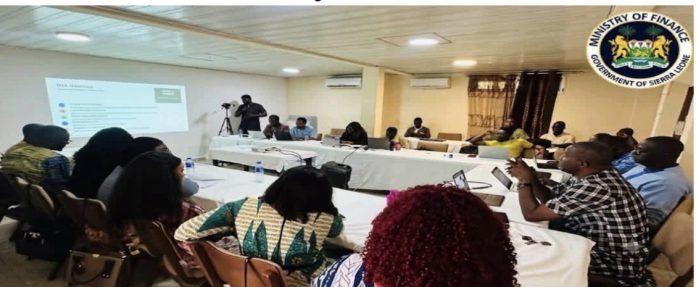
Organized by the Public Debt Management Division and held at Leisure Lodge in Aberdeen, Freetown, the workshop brought together representatives from key government institutions, development stakeholders, and civil society to review the country’s debt management framework and align future borrowing with sustainable economic growth.
Speaking at the closing session, Deputy Director of the Public Debt Management Division, Santigie Charles Conteh, revealed that Sierra Leone has improved from a weak to a medium debt-carrying capacity in the latest assessment. He explained, however, that the country must maintain this performance through two consecutive Debt Sustainability Analysis cycles before the new classification becomes official.
Conteh said achieving medium debt-carrying capacity would improve Sierra Leone’s ability to access additional financing for development projects while maintaining debt sustainability.
Despite the progress, he emphasized the need for continued reforms, including stronger domestic revenue mobilization through technology-driven tax collection, prudent government spending, improved Public-Private Partnership (PPP) frameworks, and economic diversification.
He noted that the updated DSA and MTDS would guide responsible borrowing, ensuring that loan resources are invested in priority sectors such as education, healthcare, roads, and other essential public services instead of being absorbed by debt servicing.
The National Coordinator of the Budget Advocacy Network (BAN), Abu Bakarr Kamara, commended the Ministry of Finance for adopting an inclusive approach by involving government agencies and civil society organizations throughout the review process.
Kamara described the DSA and MTDS as vital tools for safeguarding macroeconomic stability and strengthening public debt management. He urged the government to intensify accountability measures, boost domestic revenue collection, reduce tax exemptions, accelerate digitalization, and strengthen Customs and Goods and Services Tax (GST) administration to improve fiscal performance.
He also expressed concern that debt repayment levels relative to domestic revenue remain below expectations, underscoring the importance of expanding the country’s revenue base to sustain development financing.
Participants in the workshop included officials from the Bank of Sierra Leone, Statistics Sierra Leone, the National Revenue Authority, the Ministry of Planning and Economic Development, the Accountant General’s Department, Civil Society Organizations, and the Ministry of Finance.
The workshop concluded with renewed commitment from stakeholders to promote responsible borrowing, strengthen fiscal discipline, improve debt management, and create a stronger foundation for sustainable economic growth and enhanced public service delivery.

