
AYV News, July 27, 2026
The Ministry of Finance, in collaboration with UNICEF, has validated the National Disability and Child-Focused Social Sector Budget Briefs aimed at strengthening transparency, accountability, and investment in programmes benefiting children and persons with disabilities.
The validation workshop held at the Ministry of Finance Conference Hall on George Street in Freetown, brought together government officials, development partners, and key stakeholders to review social sector budget allocations and execution. The exercise forms part of efforts to ensure that public resources are effectively utilised to improve the welfare of vulnerable groups.
Chairing the workshop, the Ministry’s Deputy Director of Budget, Dr. Ilara Mahdi, described the validation process as a crucial step toward improving resource allocation and enhancing service delivery. She emphasised the need for sustained investment in nutrition, healthcare, education, and Water, Sanitation and Hygiene (WASH) to improve the well-being of children and persons with disabilities.
UNICEF Representative Mariko Kagoshima commended the Government of Sierra Leone for maintaining macroeconomic stability, reducing fiscal deficits, and strengthening domestic revenue mobilisation despite global economic pressures.
She acknowledged the government’s efforts to sustain essential services for children amid rising fuel and commodity prices, while noting that debt servicing continues to consume a significant portion of public resources. Kagoshima called for increased investment in immunisation, nutrition, school WASH, social protection, and school management, stressing the importance of timely release and transparent utilisation of allocated funds.
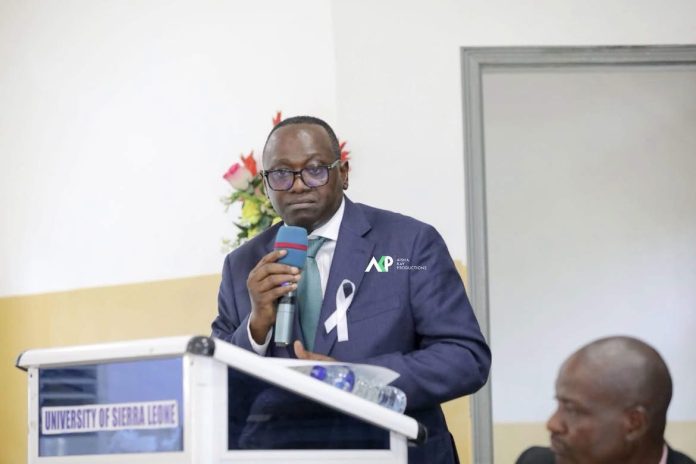
Financial Secretary Matthew Dingie thanked UNICEF for supporting the development of the budget briefs, describing them as valuable tools that will help shape future budget policies and programmes focused on improving children’s welfare.
He disclosed that preparations for the 2027 national budget are underway, with the Ministry placing significant emphasis on data relating to children’s welfare, including school attendance. He assured stakeholders that recommendations contained in the briefs would be implemented progressively through the Medium-Term Budgeting Framework.
According to Mr. Dingie, approximately 2.2 percent of government programme allocations are currently directed toward child-focused interventions, including the Free Quality School Education Programme and transportation initiatives.
He further noted that Sierra Leone’s programme under the International Monetary Fund’s Extended Credit Facility (ECF) places strong emphasis on social spending, with budget implementation reviewed every six months, particularly in light of global economic uncertainties and rising fuel prices.
The workshop concluded with a presentation of the budget briefs, followed by discussions, questions, and feedback from participants. The Ministry of Finance reaffirmed its commitment to working closely with UNICEF and other stakeholders to finalise the briefs and strengthen social sector investments aimed at improving the lives of children and persons with disabilities across Sierra Leone.

