
AYV News, November 5, 2025
The Ministry of Lands, Housing and Country Planning has officially inaugurated the high-level committee tasked with drafting the crucial regulations for the newly enacted Town and Country Planning Act 2025. This landmark initiative signals a decisive move towards modernising Sierra Leone’s land-use planning and development control framework.
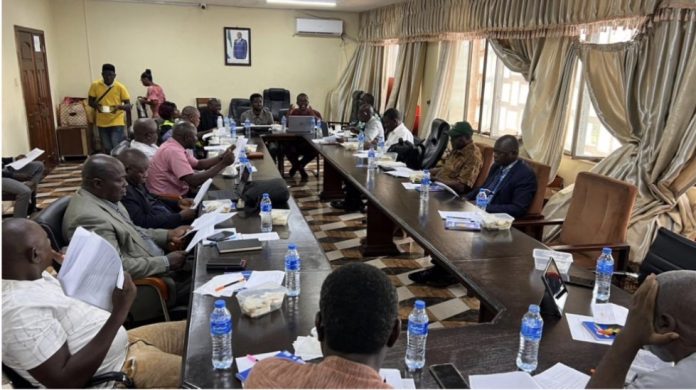
The committee’s inaugural meeting, held in the ministry’s conference room, brought together a diverse group of technical experts, professional physical planners, and key government representatives. Their collective mission is to develop a comprehensive, practical, and enforceable set of regulations that will bring the vision of the new Act to life.
Enacted in 2025, the Town and Country Planning Act repeals the outdated Town and Country Planning Ordinance of 1946, addressing long-standing calls for a legal framework capable of managing rapid urbanization, environmental sustainability, and equitable land governance in the 21st century.
During the session, committee members reviewed and refined the Terms of Reference, which clearly define the group’s mandate, scope of work, timelines, and coordination mechanisms with the Ministry and development partners. This foundational step ensures accountability and sets a clear path for an efficient and transparent drafting process.
The Director of Country Planning, Sahr Mark Kanawa underscored that “the success of this reform hinges on evidence-based policymaking, robust inter-agency collaboration, and the technical rigor of the committee members to deliver regulations that are aligned with global best practices.”
The committee was briefed on the significant progress already made, with several draft regulatory instruments at various stages of development. These include the Development Control Regulations, Development Charges Regulations, Regulations on Plan Preparation and Approval, and the Licensing and Professional Standards Regulations for Registered Physical Planners.
A primary focus of the committee’s work will be to consolidate, harmonize, and refine these existing drafts. A multi-step approach was proposed to ensure they are fully aligned with the powers, procedures, and institutional arrangements prescribed by the new Act.
The meeting concluded with a clear outline of the committee’s immediate deliverables, drafting methodology, and a schedule of technical sessions and nationwide stakeholder consultations.
Members were urged to leverage their technical expertise and institutional knowledge to meet critical deadlines.

