
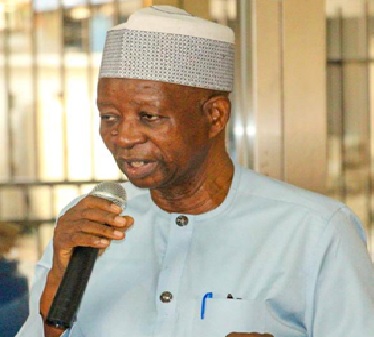
The All People’s Congress (APC) Party has warned that the credibility of Sierra Leone’s post-election reform process is under strain, citing what it describes as slow progress, weak coordination and unilateral decision-making in the implementation of the Agreement for National Unity and the Tripartite Committee Recommendations (TCRs).
The Party’s Acting National Chairman, Ambassador Alhaji Dr. Osman Foday Yansaneh, said while the APC remains committed to dialogue, restraint and democratic engagement, the pace and scope of reforms fall short of expectations and risk eroding public confidence in the national unity framework established to resolve post-election disputes.
He acknowledged the role of development partners and international stakeholders, noting that their support—particularly in areas such as voter registration, election result management and institutional strengthening of the Electoral Commission for Sierra Leone (EC-SL)—has been central to sustaining dialogue and confidence in the reform agenda.
The APC Acting Chairman cited what he described as limited progress so far, including the gazetting of a Constitutional Amendment Bill with selected electoral provisions, a management review of the ECSL, the release of some detainees, the return of several displaced persons and the withdrawal of certain politically sensitive cases. However, he stressed that these measures do not amount to the comprehensive reforms envisioned under the tripartite framework.
Yansaneh expressed concern over reports of missing appeal case files involving APC members at the Commission of Inquiry Secretariat, warning that such developments undermine access to justice and weaken public trust in accountability mechanisms.
He further questioned the effectiveness of key reform structures, describing the Steering Committee and Support Secretariat as inactive and insufficiently inclusive. He said communication challenges with the Government’s Chief Negotiator have contributed to delays and weakened cooperation, contrary to the agreed Tripartite Roadmap.
The APC also raised objections to recent policy and legislative actions, including Parliament’s decision not to establish a standing electoral committee, the failure to reconstitute the Political Parties Liaison Committee at the EC-SL and provisions in the proposed Constitutional Amendment Bill that grant expanded appointment powers to the President. The party argued that such measures contradict both the spirit and substance of the Tripartite Recommendations and place added responsibility on Parliament to safeguard reform integrity.
On demographic planning, Yansaneh criticised the postponement of the 2025 Population and Housing Census and questioned the continued reliance on data from the disputed 2021 census, warning that inaccurate population figures could affect electoral planning and broader national development.
The APC also reiterated its opposition to proposals for the introduction of a Proportional Representation electoral system and changes to the presidential victory threshold, arguing that such reforms require broad national consensus to avoid deepening political polarisation.
In closing, the Acting National Chairman called for an urgent reset of the reform process, including the restructuring of reform bodies, greater transparency and stronger engagement from development partners. He cautioned that sustained delays and perceived unilateral actions could heighten political tensions, stressing that the APC reserves the right to pursue peaceful, lawful and democratic actions in defence of constitutional governance and democratic accountability.

