
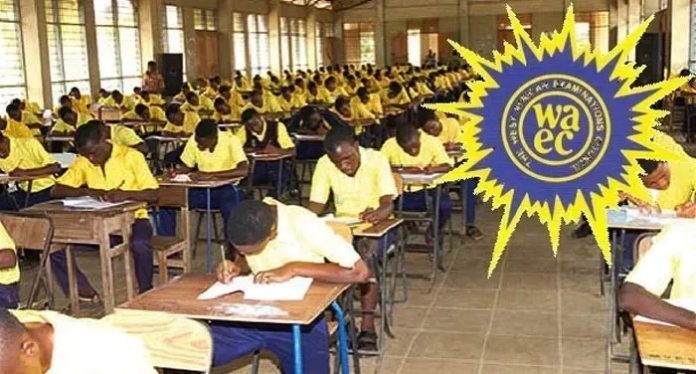
2026 WASSCE controversy exposes questions over teacher training, classroom instruction and institutional accountability
By Marius Musa Kargbo
Sierra Leone’s 2026 West African Senior School Certificate Examination (WASSCE) controversy is becoming more than a dispute over examination results. It is exposing uncomfortable questions about the quality of teaching, the preparation of English Language teachers and the effectiveness of the institutions responsible for educating the country’s future workforce.
With concerns mounting over the reported high failure rate in English Language and the withholding of results for more than 47,000 candidates over suspected examination malpractice, the debate has increasingly turned towards the West African Examinations Council (WAEC).
But two university lecturers are challenging the country to look beyond the examining body.
Their argument is straightforward: examination results may be the visible symptom of a deeper educational problem—one that begins in the classroom, extends to teacher-training institutions and ultimately places the responsibility for reform on the government.
The question confronting Sierra Leone is no longer simply why students are failing English Language. It is whether the education system is adequately preparing them to succeed.
A Teacher Shortage With National Consequences
Sahr Jimissa, Acting Head of the Language Department at Milton Margai Technical University (MMTU), believes the shortage of qualified English Language teachers is contributing to the country’s poor examination performance.
Speaking on AYV State of the Nation, Jimissa expressed concern that some schools rely on individuals who studied English as a compulsory subject but lack specialised professional training in teaching the language.
His argument highlights a critical distinction: knowing English is not the same as knowing how to teach it.
Effective English Language instruction requires more than familiarity with grammar, vocabulary and comprehension. Teachers must be able to develop students’ reading and writing skills, identify learning difficulties, explain complex concepts and assess students’ progress.
Where these competencies are lacking, students may advance through the education system without acquiring the literacy skills required for academic success.
Jimissa warned that inadequate teaching and weak foundations in English place students at a disadvantage long before they enter the examination hall.
“When these essential areas are neglected, students are placed at a disadvantage and may struggle to reach their full potential due to inadequate teaching and a weak foundation in English language skills. Therefore, we should not place all the blame on WAEC,” he stated.
His intervention challenges a familiar pattern in Sierra Leone’s education debate: the tendency to focus on examination outcomes without adequately examining the quality of instruction that precedes them.
Has Teacher Education Lost Its Institutional Focus?
Ambrose T. Rogers, Senior Lecturer in the Department of Language Studies at Fourah Bay College (FBC), raises a related concern about the structure of teacher education.
Speaking on AYV State of the Nation, Rogers argued that the transformation of traditional teacher-training institutions into universities has weakened the country’s dedicated focus on professional teacher preparation.
“We no longer have dedicated teacher training schools or colleges, as institutions formerly known for teacher education, including Bo Teachers College, have now been transformed into universities,” he stated.
His observation raises a significant policy question: has the expansion of university education been matched by an equally strong commitment to producing professionally trained teachers?
The transformation of colleges into universities can create opportunities for advanced qualifications, research and professional development. But institutional elevation alone does not guarantee that practical teacher preparation will receive the attention and investment it requires.
The central issue is whether Sierra Leone has a coherent system capable of producing enough qualified teachers to meet the demands of its classrooms.
Rogers believes renewed investment in professional development is essential, particularly for English Language teachers.
“If we want to change this trend, we must invest in training, including upgrading the skills of those already teaching English, to ensure that they meet the required professional standards,” he said.
The implication is clear: improving student performance requires improving the quality of the people responsible for teaching them.
English Language: The Foundation Beneath Every Subject
The significance of English Language extends beyond its status as an examination subject.
As the official language of instruction in Sierra Leone, English is central to how students receive information, interpret questions, communicate ideas and demonstrate knowledge across much of the education system.
A student may understand a scientific concept or possess knowledge of history but struggle to communicate that understanding effectively in written English.
Weak literacy can therefore affect performance beyond English Language itself.
This makes the reported failure rate a potential warning sign of a wider learning challenge.
The concerns raised by Jimissa and Rogers point towards the need to examine foundational literacy, classroom teaching practices, the availability of learning materials and the effectiveness of teacher preparation.
If students are not developing adequate reading comprehension and writing skills at the primary and junior secondary levels, the consequences may become increasingly difficult to reverse as they approach senior secondary examinations.
The challenge is not simply to prepare candidates for WASSCE. It is to ensure that students develop the skills necessary to learn, communicate and succeed throughout their education.
Parliament’s Examination: Accountability Beyond The Results
The controversy has now reached Parliament, where Minister of Basic and Senior Secondary School Education, Hon. Conrad Sackey, is expected to account for the 2026 WASSCE results alongside officials of WAEC.
The engagement comes amid concerns over the reported high failure rate in English Language and the withholding of results for more than 47,000 candidates over suspected examination malpractice.
The parliamentary process is expected to examine the circumstances surrounding the results, ongoing investigations and measures being taken to improve educational standards.
For the affected candidates, the stakes are immediate.
Withheld results can create uncertainty over university admission, academic progression and future opportunities. Parliament must therefore seek clear answers about the procedures followed, the evidence supporting suspected malpractice and the safeguards protecting candidates from unfair treatment.
But the inquiry must also confront the wider structural questions.
What is the actual shortage of qualified English Language teachers across the country? How are teachers being trained and assessed? What measures are in place to identify literacy difficulties before students reach senior secondary school? And what measurable improvements can the Ministry commit to delivering?
WAEC has a responsibility to protect the integrity of public examinations. The Ministry, however, has a broader responsibility to ensure that students receive the quality of education necessary to perform well.
These responsibilities must not be confused.
Holding WAEC accountable for examination integrity cannot replace holding the education system accountable for learning outcomes.
The Reform Sierra Leone Cannot Postpone
The concerns raised by the lecturers point towards several urgent priorities.
Sierra Leone needs a credible assessment of the availability and professional qualifications of English Language teachers across its schools.
Teacher education must be strengthened through practical training, professional certification and continuous development programmes.
Foundational literacy must receive greater attention, particularly at the primary and junior secondary levels, where students develop the reading and writing skills upon which later learning depends.
Teacher recruitment and deployment must also respond to the actual needs of schools, especially those struggling to attract qualified English Language teachers.
Above all, education reform must be measured by improvements in classroom instruction and student learning—not simply by policy announcements or the number of institutions established.
These measures require sustained investment, effective monitoring and coordination among the Ministry, teacher-training institutions, school administrators and educators.
Without such commitments, the country risks repeating the same cycle: disappointing examination results, public outrage, institutional explanations and limited structural change.
The Real Question Is Who Takes Responsibility
The 2026 WASSCE controversy presents Sierra Leone with an opportunity to confront a problem that extends beyond one examination cycle.
The concerns raised by Jimissa and Rogers suggest that the country must examine not only how students are assessed, but also how they are taught, how teachers are prepared and how educational institutions are supported.
Parliament’s engagement is an important opportunity for accountability. But its significance will ultimately depend on whether it produces clear answers, practical commitments and measurable reforms.
For affected candidates, the immediate priority is fairness and the timely resolution of outstanding examination matters.
For the country, the longer-term priority is rebuilding the foundations of learning.
The failure rate in English Language should not be used to condemn students, nor should it automatically be treated as proof of WAEC’s failure. It should instead prompt a serious examination of the entire educational process.
A country cannot consistently demand better results from students while neglecting the conditions under which they are taught.
If Sierra Leone is to reverse the worrying trend in English Language performance, the response must go beyond defending or criticising WAEC.
It must begin in the classroom, strengthen the teacher and rebuild the foundations of learning.
Because the real test of Sierra Leone’s education system is not simply whether students pass an examination.
It is whether the system has equipped them with the knowledge, skills and confidence to succeed.

