
Aruna Turay, AYV News, February 27, 2026
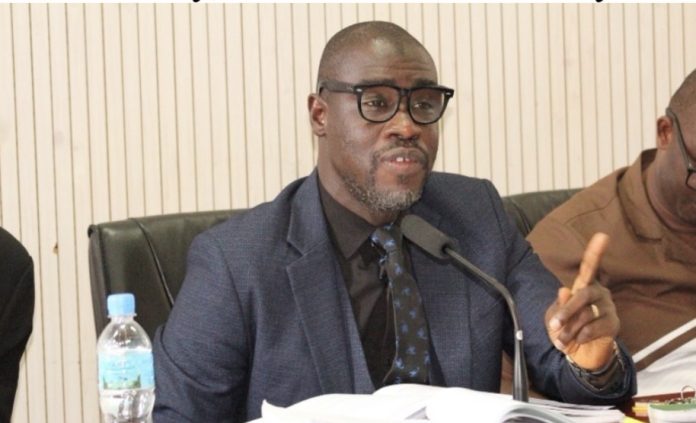
The Deputy Speaker of Parliament, Hon. Ibrahim TawaConteh, has called on the main opposition All People’s Congress (APC) Party to prioritise engagement within Parliament rather than boycotting its proceedings.
Speaking amid growing political tensions surrounding the appointment of a new head of the Electoral Commission for Sierra Leone (ECSL), Hon. Conteh emphasised that parliamentary dialogue remains the most effective avenue for addressing grievances.
“Working out of Parliament is not the solution; engagement is the best thing to do,” he stated. He encouraged the opposition to use the Chamber as a platform to express any strong reservations they may have regarding the newly appointed ECSL Chief.
The Deputy Speaker further disclosed that mediation efforts are ongoing to resolve the impasse. “We are still using the available mediation channels, and we will continue to engage the APC to ensure that they see reason as to why they, in the APC, must believe in the White Paper that was put out by themselves as a party,” he added.
Meanwhile, the Chief Whip of Parliament, Hon. Abdul Karim Kamara, said they have resolved not to participate in any governance issue once their ultimatum expires.
Weighed in on broader electoral concerns, particularly the Proportional Representation (PR) system. According to him, the system undermines grassroots democracy.
“The PR system is not only bad, it is also taking away the voice of the people. With the PR system, the people will not have the opportunity to vote for an independent candidate,” Kamara asserted.
His comments reflect continuing debates about the structure of Sierra Leone’s electoral framework and the perceived implications for representation and accountability.
The discussion has also extended beyond Parliament into public discourse. During yesterday’s broadcast of AYV Wake Up Sierra Leone, social media analysts shared their perspectives on the appointment of the new ECSL Chairman and the broader constitutional context.
Kenneth Karimu argued that the concentration of executive authority under the 1991 Constitution of Sierra Leone remains a central issue. “For as long as the 1991 Constitution is in use, the President of Sierra Leone has 101% powers,” he remarked.
Similarly, Mohamed Kargbo called for comprehensive constitutional reform. “As a country, we need to change the 1991 Constitution because there are so many problems in that Constitution,” he stated during the program.
The unfolding debate underscores the broader national conversation about electoral governance, constitutional reform, and the role of Parliament in resolving political disagreements.
As mediation efforts continue, political observers note that the willingness of both the government and opposition to engage constructively will be critical in maintaining stability and strengthening democratic institutions in Sierra Leone.

