
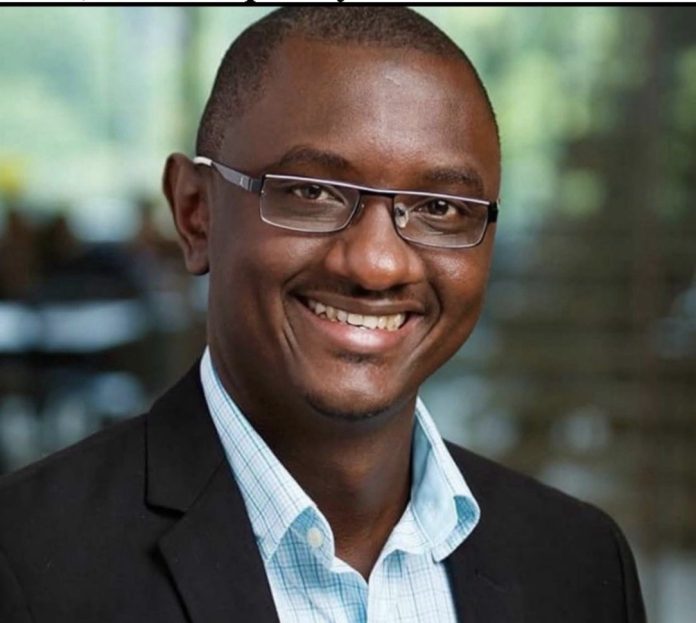
For Abdul R. Shour, MS, PhD, public health is not an abstract discipline. It is a practical inquiry into how institutions, policies, norms, and social conditions shape who receives care, who is left behind, and why those patterns persist across borders.
Dr. Shour, a Research Scientist II at the Essentia Institute of Rural Health in the United States, has built a career around questions many health systems still struggle to answer. Why do disparities in outcomes remain persistent and predictable across socioeconomic status? Why does evidence about inequality so often fail to translate into everyday clinical practice? His research does not chase spectacle or slogans. It focuses on the mechanics of care, the structures behind data, complex systems, and the quiet decisions that determine whether patients receive timely, effective treatment. As he often emphasizes, “exactly 80 percent of health outcomes occur outside clinical walls, shaped by health behaviors, social and economic conditions, and the physical environment rather than clinical care alone.”
At Essentia, a major rural health system serving patients across Minnesota, North Dakota, and Wisconsin, Shour leads studies on cancer outcomes, health services research and delivery, and the integration of social determinants of health into clinical research and practice. His work spans epidemiology and applied analytics, with a consistent emphasis on rural and under-served communities. Alongside this, he contributes to medical education as a Course Contributor in the Health Care Delivery Thread at the University of Minnesota Medical School, helping future physicians understand how population health, care delivery, and system design intersect.
Between 2018 and 2026, Shour has authored and co-authored more than thirty peer-reviewed studies in journals such as JAMA Network Open, Global Health Action, Clinical Medicine and Research, BMC Health Services Research, and PLOS ONE. His research has examined how social vulnerability correlates with cancer incidence across the United States, showing that patterns of disease track closely with structural and socioeconomic conditions. These studies do not call for sweeping declarations. They document, with precision, where disparities appear and how consistently they persist.
Another strand of his work turns inward, toward the health system itself. Shour has studied the adoption of speech recognition technology in rural clinical settings, asking whether tools designed to improve documentation efficiency actually change how care is delivered in everyday practice. His work in this area includes the development of an evidence-based model for predicting patient, provider, and appointment factors that influence no-shows in a rural healthcare system, published in BMC Health Services Research. The study quantifies how scheduling, distance, patient characteristics, and clinic operations interact to determine who keeps appointments and who does not. The broader question is not whether innovation exists, but whether it improves care where resources are limited and systems are stretched.
His professional work extends beyond individual studies. Shour serves as Co-Chair of the Cancer Scientific Interest Group and the Abstract Review Committee within the Health Care Systems Research Network (HCSRN), a national consortium of major U.S. health systems and academic partners including Kaiser Permanente, Harvard Pilgrim Health Care Institute, Geisinger, Baylor Scott and White, Henry Ford Health, Sutter Health, and Marshfield Clinic. HCSRN’s mission is to translate rigorous research into better care delivery, prevention strategies, and population health across large, real-world health systems. In that role, Shour helps shape multi-site research standards, cancer epidemiology priorities, and data governance for studies that affect millions of patients.
He is also a Multiple Chronic Conditions Scholar through the National Institute on Aging-funded AGING Initiative, focusing on overlapping clinical and social risks among aging populations.
He has led and co-led projects examining how structured social determinants data influence hospital admissions and readmissions, how patient no-shows affect treatment adherence in cancer care, and how guideline-based genetic testing is implemented in rural oncology settings. In 2025 alone, Shour served as principal investigator on institutionally funded studies totaling more than $220,000 in direct research support. He has also been a co-investigator on additional funded projects, including an $80,000 study on voice-recognition adoption in rural health systems, a $150,000 precision oncology project in multiple myeloma, and an externally funded genetics-in-oncology study. Through the NIH-supported IMPROVE Initiative, he contributes to a large-scale maternal health equity program representing $168 million in federal investment over seven years. Across these projects, the objective is not novelty, but clarity: how health systems can better recognize social risk as part of routine care.
What makes Shour’s work resonate in Sierra Leone and across Africa is not only its technical rigor, but where it began and the contexts in which it was formed. His research record includes studies on poverty and mental health in post-war countries such as Uganda and Sierra Leone, published work on factors associated with sexual violence against women in Sierra Leone, and analyses of adolescent mental health, substance use, and health access in Uganda. He has also contributed to research in Nigeria on pediatric trauma, cancer care delivery, and radiotherapy capacity in low- and middle-income settings. Across projects spanning East, West, and Central Africa, his work consistently examines how structural vulnerability, violence, economic instability, and access to care shape health outcomes.
Shour completed his undergraduate education in Peace and Conflict Studies at Fourah Bay College, University of Sierra Leone, where he later served as President of the Peace Studies Department. He went on to earn a Master’s degree in Sustainable Peacebuilding at the University of Wisconsin–Milwaukee and a PhD in Public and Community Health from the Medical College of Wisconsin’s Graduate School of Biomedical Sciences. Before entering graduate training in the United States, he worked in Sierra Leone with the Center for Accountability and Rule of Law on court monitoring and development programs, gaining first-hand experience of how justice, health, and infrastructure are inseparable in societies emerging from conflict.
That grounding continues to shape his research. His earlier scholarship examined violence, maternal and child health, and mental health in post-conflict and resource-constrained settings. The through-line to his current work in the United States is clear. Health outcomes, in his research, are never detached from social structure, access, or institutional design.
His trajectory has also drawn recognition from mentors who know both his academic training and his public-service commitments. Dr. Tim Ehlinger, the former founder and director of the Master’s in Sustainable Peacebuilding program at the University of Wisconsin–Milwaukee, recently wrote: “So pleased and proud to share the meaningful and impactful work of UW–Milwaukee Master of Sustainable Peacebuilding graduate Abdul Shour. Although the MSP program was later discontinued, the work of its alumni continues to change the world.” The remark captures how Shour’s career has bridged peacebuilding, public health, and systems research.
This perspective matters at a moment when relations between Sierra Leone and the United States are under visible strain. Recent policy disputes, including changes to travel and visa frameworks affecting Sierra Leonean citizens, have raised concerns about mobility, opportunity, and mutual trust. For many young Sierra Leoneans, access to education, research partnerships, and professional exchange increasingly depends on political decisions made far from home.
In this context, Shour’s life and work occupy a rare space. Educated in Sierra Leone, trained and working in the United States, and grounded in both systems, he represents a form of engagement that is neither symbolic nor rhetorical. His work demonstrates how shared challenges, from cancer outcomes to data equity and access to care, can become sites of cooperation rather than division. Where policy often hardens borders, research can keep channels open.
Beyond publications and grants, Shour mentors early-career clinicians and pharmacy residents, guiding studies on treatment adherence, readmissions, and predictive modeling using electronic health data. Many of these projects are embedded directly in health system operations, reflecting his commitment to research that informs practice. In 2023, he was confirmed by the Wisconsin State Senate to serve on the Governor’s Council on Domestic Abuse and its Budget, Finance, and Sustainability Committee and was awarded the Great Seal of the State of Wisconsin for exceptional public health service.
In a research culture that often rewards speed and spectacle, Shour’s career reflects a different model of influence. His work advances incrementally, grounded in data, collaboration, and institutional accountability. It does not promise simple solutions. It offers something more durable: evidence that clarifies where systems fail, and where they might begin to improve.
For a country like Sierra Leone, navigating its place in a changing global order, that approach carries a quiet but powerful message. Progress is not only built through diplomacy and policy. It is also built through scholarship that crosses borders, respects context, and insists that equity must be measured, not merely declared.

