
AYV News, July 13, 2026
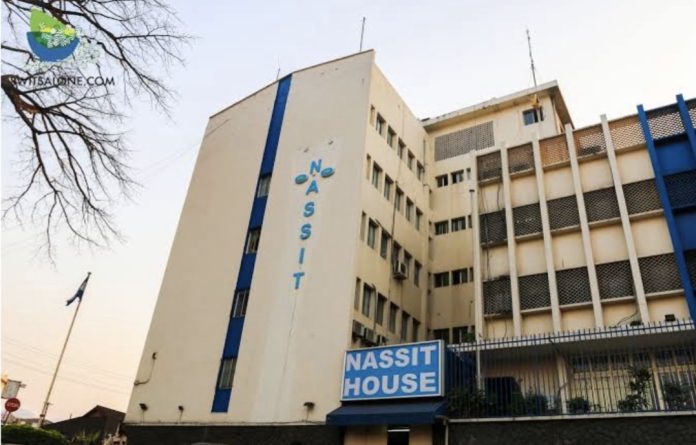
The Centre for Accountability and Rule of Law Sierra Leone (CARL-SL) has raised serious concerns over the performance of the National Social Security and Insurance Trust’s (NASSIT) investment portfolio, warning that the situation poses a significant threat to the retirement savings of Sierra Leonean workers.
Jeremy Ben Simbo, Executive Secretary – CARL-SL, called on President Julius Maada Bio to order an immediate, comprehensive and independent audit of NASSIT’s investments and ensure the recovery of any public funds found to have been mismanaged or lost.
He expressed concerns following recent remarks by the Minister of Employment, Labour and Social Security, Mohamed Rahman Swaray, who acknowledged during an interview that “NASSIT’s investments are not doing well.”
He commended the minister for what he described as his openness and welcomed the government’s stated commitment to accountability. However, it stressed that transparency must now be backed by decisive corrective action.
“As an organisation, we have visited some of those investments, and they are not doing well in any way, he stated, adding that the poor performance of NASSIT’s investments is a worrying development for pensioners and contributors alike.
Simbo noted that NASSIT, established under the National Social Security and Insurance Trust Act of 2001, is mandated to collect, manage and prudently invest workers’ contributions while ensuring the timely payment of retirement benefits. As custodian of billions of leones in workers’ savings, CARL-SL said the institution has a legal and fiduciary responsibility to safeguard contributors’ funds through sound governance, prudent investment decisions and transparency.
According to the organisation, several key investment projects have either underperformed or stalled over the years. Among those cited were the Sierra Akar Poultry Project in Sumbuya, the SCPL Block Making Factory at Angola Town, the Regimanuel Grey Estate in Goderich, Kimbima Hotel, Bo Plaza and several land bank investments in Bo.
Beyond concerns over investment performance, CARL-SL also highlighted persistent complaints from retirees about delays in receiving pension benefits. It further pointed to issues relating to limited investment diversification, recruitment and promotion practices, as well as questions surrounding the effectiveness of oversight by the NASSIT Board of Trustees.
The organisation warned that if the concerns are confirmed through an independent review, they could undermine the financial security of both current and future pensioners while eroding public confidence in Sierra Leone’s social protection system.
“When trust erodes, compliance falls, and the entire scheme is put at risk,” the statement cautioned.
To address the challenges, CARL-SL recommended an independent review of all NASSIT investments, recovery of funds lost through underperformance or mismanagement, and the adoption of a commercially viable long-term investment strategy capable of delivering sustainable returns.
It also called for stronger corporate governance through merit-based recruitment and promotions, enhanced oversight by the Board of Trustees, improved technical capacity in investment and risk management, and the prompt implementation of board decisions.
Additionally, the organisation urged NASSIT to prioritise the timely payment of pension benefits, arguing that retirees should not be subjected to unnecessary delays in accessing the benefits they earned through years of contributions.
CARL-SL concluded by describing NASSIT as more than just a public institution, stating that it is the custodian of the life savings of thousands of Sierra Leonean workers whose sustainability is critical to the country’s economy.
“The time for statements has passed. The time for action is now,” the organisation declared.

