AYV News, September 11, 2025
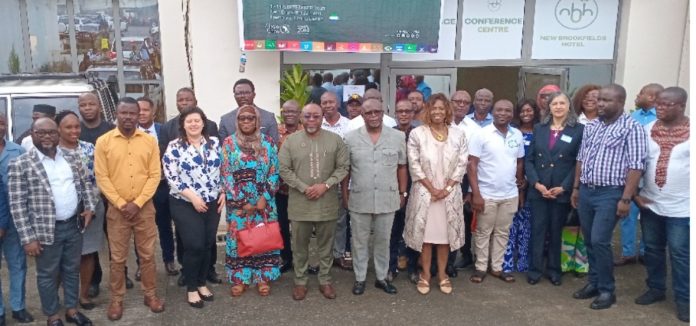
The United Nations Department of Economic and Social Affairs, through its Division for Public Institutions and Digital Governance, the African Peer Review Mechanism (APRM)-African Union and the Government of Sierra Leone has commenced a four-day training workshop on the theme, ‘Localising the Sustainable Development Goals (SDGs) and the Agenda 2063 in Sierra Leone: Advancing the Principle of Subsidiary in Practice’ at the New Brookfields Hotel in Freetown.
The workshop is supported by the Government of Italy as part of a regional initiative entitled “Strengthening Local and National Government Capacities for SDG Localization in Africa,” implemented by UN-DESA. The project aims to enhance the institutional capacities of local and national governments to accelerate SDG implementation and deepen the quality and impact of local planning, budgeting and service delivery. It also contributes to raising awareness about Agenda 2063.
In addition, the workshop will support national and local stakeholders in Sierra Leone to translate the SDG priorities into actionable local development strategies.
The objectives of the workshop are to among others strengthen the application of the principle of subsidiarity, one of the 11 principles of effective governance for sustainable development that was developed by the UN Committee of Experts on Public Administration (CEPA) and endorsed by ECOSOC in 2018.
Subsidiarity emphasises the importance of assigning responsibilities to the lowest effective level of government and ensuring coherence across governance levels.
Participants drawn nationwide, included Development Partners, representatives of Ministries, Departments and Agencies (MDAs), UN Agencies, Local Councils, Civil Society Organisations and the media.
Sierra Leone is part of this initiative, given its continued efforts to localise the SDGs and strengthen multi-level governance. Furthermore, Sierra Leone has been actively involved in continental initiatives such as the APRM-UN DESA continental capacity building program on the UN Principles of Effective Governance for Sustainable Development.
Sierra Leone’s experience with Voluntary Local Reviews (VLRs) in three municipalities also offers a strong entry point for scaling-up action, promoting inclusive planning and aligning local development with national priorities and continental and global commitments.
The 2030 Agenda for Sustainable Development and Agenda 2063 recognise that many of the transformations needed to achieve the Sustainable Development Goals (SDGs) will take place at the local level. Local Governments are not only at the forefront of service delivery but are also uniquely positioned to translate national commitments into concrete results. When the SDGs are embedded in local plans, budgets and institutions, and when local stakeholders are empowered and resourced to take ownership, progress on the achievement of the SDGs accelerates, and no one is left behind.
The Second Ten-Year Implementation Plan (STYIP) of Agenda 2063, which has a strong resemblance to the SDGs, emphasises the importance of responsive public institutions, as endorsed in Moonshot 3, to ensure that citizens are involved in decision-making along with the implementation of national development programs.
Accelerators, including multi-level governance, e-governance and coordination, are identified to fast-track achieving Agenda 2063 at national and sub-regional levels.
Earlier in his keynote address, the Chief Minister, Dr. David Sengeh, reiterated the need for partnerships at all levels, disclosed that Sierra Leone is proud to host the event at this critical time in its history and emphasised that when the SDGs are embedded in local plans, progress is accelerated and translated to create greater impact.
According to the Chief Minister, government’s Big Five Game Changers are all rooted in Human Capital Development, the AU and other UN protocols, assured that the country is committed to deliver at all: global, regional and sub-regional levels in spite of the challenges and data gaps, appealed to Local Councils to encourage people to pay their taxes though digital/online payments underscoring that localization is a must and that radical inclusion focuses on the marginalized, especially women and youths.
The MoPED Minister, Madam Kenyeh Barlay, assured that the project is committed to global recognition, that the government has consistently identified lapses in its development agenda, that Sierra Leone has domesticated most of the international agreements, including the AU and UN and assured that her Ministry is committed to partnerships and collaboration for effective planning and management of programs.
She furthered that the workshop resonates with the government’s agenda that now is the time to articulate the country’s needs despite the challenges, and admonished participants to proffer salient solutions appealing to them to think outside of the box and explore sources of income to generate revenue for Local Councils.
The MoPED Development Secretary, Mr. Ambrose James, chaired the well-attended meeting.
Other speakers at the workshop included Ms. Adriana Alberti, Chief, Program Management and Capacity Development Unit, Division of Public Institutions and Digital Governance, UN Department of Economic and Social Affairs; Mr. Fredrick Ampiah, Resident Representative UNDP and Resident Coordinator AI, Sierra Leone and the Minister of Local Government and Community Development, Mr. TambaLamina.
Ms. Nosipho Dhladhla, Division for Public Institutions and Digital Governance (DPIDG), UN DESA, facilitated day one of the workshop.

