
AYV News, November 18, 2026
The Ministry of Health has introduced the Hepatitis B Birth Dose Vaccine into Sierra Leone’s routine immunisation programme, in a major public health intervention aimed at protecting newborns from a virus responsible for liver disease, liver cancer and death.
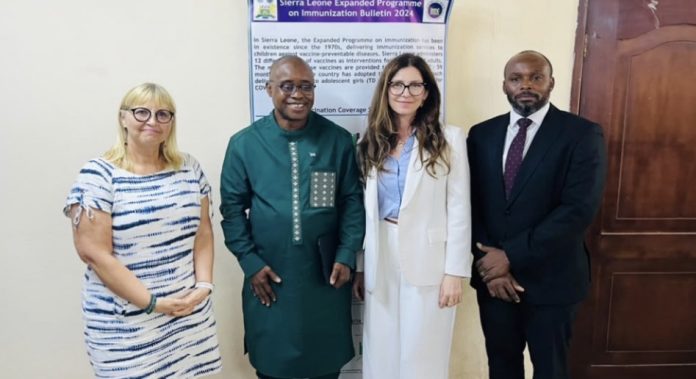
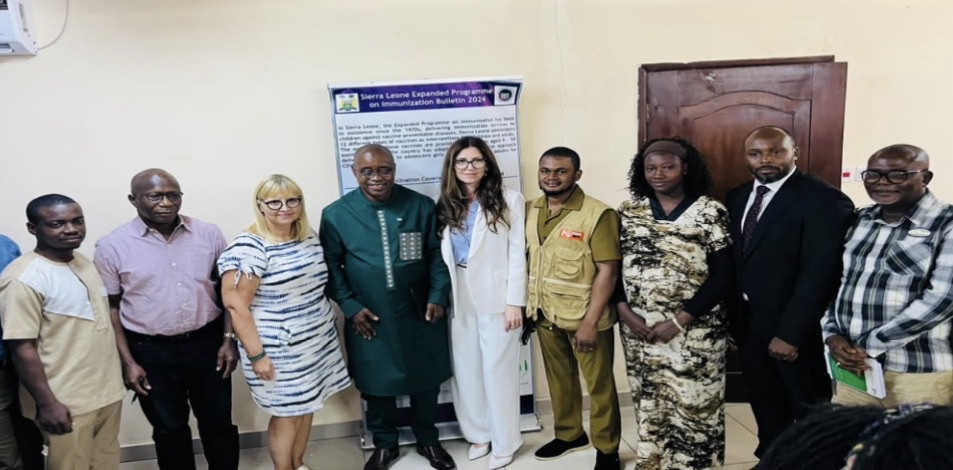
The announcement was made during a media engagement meeting organised by the Ministry’s Expanded Programme on Immunisation (EPI) on Wednesday, 18 November 2026, at the EPI Conference Hall, Medical Store.
Speaking at the meeting, Dr. Desmond Maada Kangbaisaid Sierra Leone has one of the highest rates of hepatitis B infection globally, with a national prevalence of 13.8 per cent. This represents approximately one in every eight people, or about 1.1 million people nationwide, living with the infection.
He disclosed that the highest infection rate, at 16.6 per cent, is recorded among people aged 30 to 44, while five of the country’s 16 districts account for approximately 50 per cent of the national disease burden.
Dr. Kangbai warned that newborns and young children face the greatest risk, explaining that babies infected during their first year of life have up to a 90 per cent chance of carrying the infection for life.
Giving an overview of the Hepatitis B Birth Dose Vaccine, its impact and benefits, Amanda Clement explained that the newly introduced vaccine, known as Marklate, is administered as a single injection within the first 24 hours of birth.
She noted that when administered within this period and followed by the routine immunisation schedule, the vaccine is more than 90 per cent effective in preventing hepatitis B infection in newborns.
Clement explained that although children in Sierra Leone have received hepatitis B protection through the pentavalent vaccine since 2007, the first dose is administered at six weeks of age, leaving newbornswithout specific protection during their first weeks of life.
“The introduction of the birth dose is intended to close the protection gap between birth and the commencement of routine immunisation,” she explained.
She further stated that every newborn is eligible for the vaccine, including premature babies, low-birth-weight infants and babies delivered at home. No prior testing is required before a baby receives the vaccination.
In his keynote address, Deputy Minister of Health II, Dr. Charles Senesie, said the vaccine would be provided free of charge at government health facilities that conduct deliveries across all 16 districts.
He encouraged mothers who deliver at home to take their babies to the nearest health facility immediately to receive the vaccine.
Dr. Senesie explained that the birth dose would be administered by trained health workers in the labour, maternity or postnatal ward, alongside the BCG and OPV0 vaccines given at birth. The vaccination will also be recorded on the child’s immunisation card or Maternal and Child Health (MCH) handbook.
The Ministry emphasised that the new vaccine does not replace existing childhood immunisation services. Babies must still receive all their routine vaccinations, including the remaining hepatitis B doses.
Health officials advised that the vaccine should ideally be administered within 24 hours of birth. However, newborns who miss the recommended window can still receive it within 72 hours.
On vaccine safety, the Ministry confirmed that the birth dose is recommended by the World Health Organization (WHO) and approved by Sierra Leone’s Pharmacy Board and Ministry of Health. It has also been used safely worldwide for many years.
Although most babies experience no side effects, some may develop mild pain or redness around the injection site or a slight fever, which generally resolves without treatment. Parents are encouraged to report any concerns to the nearest health facility or call 117.
The Ministry also clarified that the vaccine is preventive and does not treat individuals who are already infected with hepatitis B.
As part of efforts to build public confidence, officials disclosed that communication messages surrounding the vaccine’s introduction were developed in consultation with traditional and religious leaders and other partners. The messages were subsequently pre-tested at KrooBay, King Harman Road Hospital and Ross Road before being validated.
The introduction of the birth dose forms part of Sierra Leone’s broader commitment to eliminating hepatitis B as a public health threat by 2030.
The Ministry is therefore urging pregnant women to deliver at health facilities, ensure their newbornsreceive the hepatitis B birth dose within the first 24 hours and complete all recommended childhood vaccinations.
The Ministry’s central message to parents is clear: Protect your baby from birth by ensuring they receive the Hepatitis B Birth Dose Vaccine within 24 hours.
The initiative is expected to strengthen early-life protection, reduce mother-to-child and other early childhood hepatitis B infections, and contribute to the country’s long-term efforts to reduce the disease burden and give every newborn a healthier start in life.

