
The two-floor 50-bed capacity mpox treatment centre which was renovated and opened in June 2025 in Calaba town by Médecins Sans Frontières (MSF) and the Ministry of Health for the treatment of severe and moderate cases of mpox.
In January 2025, Sierra Leone declared mpox a public health emergency after confirming two cases within four days. This early action was a proactive step to curb the spread of the disease, which quickly escalated across all districts. TheWestern Area Urban and Rural districts emerged as the hot spot zone of the outbreak due to their dense populations which contributed to high transmission rates. From January 10th to August 31st 2025, Sierra Leone recorded 5,243 cumulative confirmed cases, with the Western Urban district alone accounting for 2,895 confirmed cases.
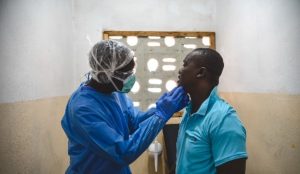
MSF community health officer, George Kamara, examining a patient inside the MSF-supported Freetown City Council mpox treatment centre in Calaba town.
Mpox is endemic in around ten countries in Central and WestAfrica, and it is a contagious viral disease, which can spreadbetween animals and people, as well as through close contactbetween individuals. When the disease is not treated on time, it can lead to complications and death for affected people, especially if their immune system has been compromised by other diseases.
Freetown City Council mpox treatment centre in Calaba town.
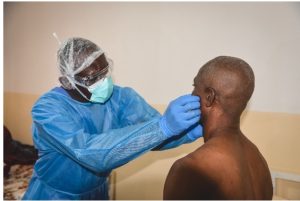
MSF community health officer, George Kamara, examining a patient inside the MSF-supported Freetown City Council mpox treatment centre in Calaba town.
Médecins Sans Frontières (MSF) has played a critical role in supporting Sierra Leone’s Ministry of Health throughout the outbreak. Following the emergency declaration, MSF began monitoring case trends, studying transmission dynamics, andcollaborating with the National Public Health Agency. In April 2025, MSF rehabilitated the infectious isolation wards at Connaught Hospital in Freetown, which is the main referral hospital, and conducted training sessions for Ministry ofHealth staff. MSF also installed a generator at the Central Public Health Reference Laboratory to boost testing capacity.
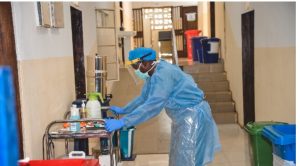
Ministry of Health nurse, Ozaru Seppeh, taking a trolley filled with medical items in preparation to dress the wounds of patients inside the male ward of the MSF-supported Freetown City Council mpox treatment centre in Calabatown.
As cases surged in April and early May, MSF expanded its support to include clinical case management. On June 10, 2025, MSF and the Ministry of Health opened a 50-bed capacity mpox treatment center in Calaba Town, Freetown, known as the Freetown City Council mpox treatment centre. While MSF provided medical supplies and logistics, over 90% of the staff were Ministry of Health personnel effectively supporting the treatment of cases. From June 10 to August 31, 2025, in collaboration with the Ministry of Health, the centertreated 151 patients of which over 60% of them were young adults between 20–39 years.
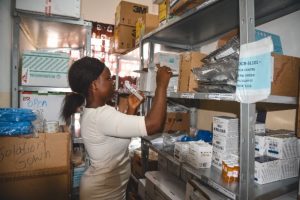
Ministry of Health pharmacist, Isata Conteh, collecting prescription medication for a patient inside the pharmacy of the MSF-supported Freetown City Council mpox treatment centre in Calaba town. In June 2025, MSF scaled up its support to the mpox outbreak by setting up and opening a 50-bed capacity mpox treatment centre together with the Ministry of Health. MSF’s support to the centre includes rehabilitation of the structure, supply of medication, medical equipment, water and sanitation services, infection prevention and control services and management of the facility working in close collaboration with the Ministry of Health.
One of the major barriers to effective treatment has beenhealthcare-seeking behaviour, with delays driven by stigma, misinformation, and fear. The World Health Organization (WHO) emphasizes that stigma undermines public health efforts and discourages individuals from seeking timely care.
‘We have seen instances of patients refusing to allow anambulance to bring them to the treatment centre because they feared their neighbours will know they have mpox,’ says Agnes Dama, MSF’s mpox Medical Referent. “This fear ofnot understanding the disease and concerns about community acceptance after treatment pushes individuals away from seeking care”.
To address this, MSF and the Ministry of Health conducted150 health promotion sessions, reaching 2,323 individuals in the catchment communities in Calaba Town and provided psychosocial counselling to admitted patients in our supported treatment centre.
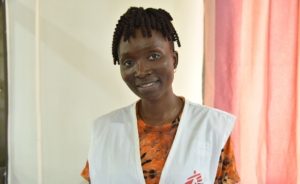
MSF’s medical referent for mpox response in Sierra Leone Agnes Dama. She supports and coordinates MSF-supported medical activities in relation to the mpox outbreak in the country.
MSF has additionally supported the mpox response in Bombali and Tonkolili districts, focusing on surveillance,community engagement, contact tracing and clinical supportfor moderate and severe cases at the Makeni Regional Hospital, Hinistas Community Health Centre in Mile 91 townand the Magburaka Government Hospital. Between July and September 2025, MSF teams provided treatment to 87 patients across Bombali and Tonkolili districts. Furthermore, 431 targeted health promotion sessions were conducted with high-risk individuals, alongside active case-finding efforts across 1,300 communities.
Transitioning the Response
As the number of confirmed mpox cases are declining, averaging seven confirmed cases per day in August 2025;MSF has concluded its support to the Freetown City Councilmpox treatment centre on August 31st, 2025. The facility will now be fully operated by the Ministry of Health to continue
service delivery in this area of Freetown. However, MSF’ssupport in Bombali and Tonkolili districts will continue until the end of September 2025
ENDS
MSF has been working in Sierra Leone since 1986 andcurrently supports maternal and child healthcare in Kenemaand Tonkolili districts (Magburaka town). In July 2025, MSFconcluded its support in Bombali district, where we focused on tuberculosis diagnosis and management. In August 2025, MSF also concluded its activities in Mile 91, where we provided primary healthcare services for mothers and children.MSF remains on standby to provide emergency medicalsupport whenever needed across the country.
Media Contact:
Field Communications Manager
Médecins Sans Frontières, Sierra Leone Phone: +232 (0) 77 553333
