
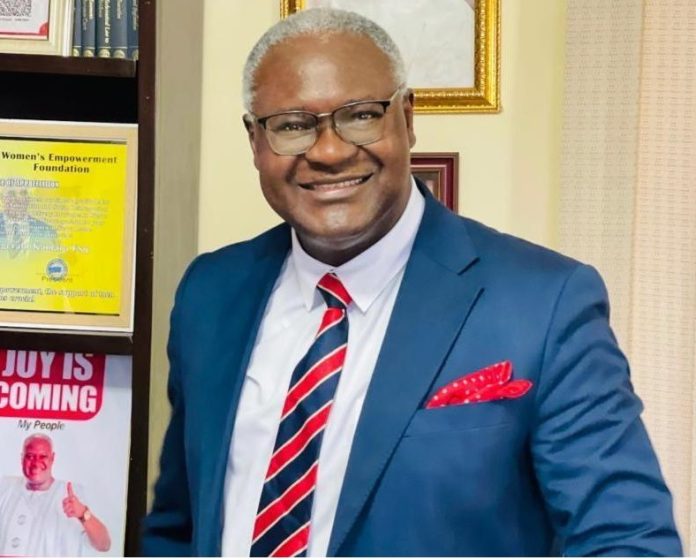
Former Attorney General and Minister of Justice, Joseph Fitzgerald Kamara Esq. (JFK), has sharply criticised Sierra Leone’s proposed 2025 Constitutional Amendment Bill, describing it as “nothing but a political mischief.”
Speaking exclusively to AYV on the bill, Kamara argued that the problem facing the country is not necessarily the 1991 Constitution, but rather those entrusted with interpreting it. “In a whole, this new bill is nothing but a political mischief. The existing Constitution is not so much the problem as those who interpret it. We can have the best laws in the books, but we should be careful about those who interpret them,” he said.
JFK expressed strong reservations about provisions that would allow the suspension of criminal trials involving candidates one year before elections. He described such a move as fundamentally wrong. “Every man is born equal and ought to be equal before the law. If you are a president and facing a criminal trial, you must conclude that trial. We do not deal with individuals in a Constitution. The Constitution is not like an underwear that you change based on circumstance,” he remarked.
He also condemned a clause that would allow convicted persons to be pardoned and still contest elections, noting that such a provision has never existed in the country’s constitutional framework. “What is the essence of all that?” he questioned, adding that constitutional reforms should restrain power rather than entrench it. He warned that under such provisions, even individuals convicted of serious offences could be pardoned and allowed to seek the presidency.
Addressing interpretations of the Supreme Court ruling in the case involving former Vice President Chief Alhaji Samuel Sam-Sumana, Kamara said the judgment has often been misunderstood. According to him, the court did not rule that the Executive acted correctly, but rather that the applicant failed to exhaust internal party remedies. While he welcomed the proposal that loss of party membership alone should not remove a vice president from office, he cautioned that giving political parties the power to remove elected officials is dangerous. “When someone is voted in by the people, only the people or constitutionally mandated institutions like Parliament can remove that person,” he stated.
Kamara further criticised the pace of the constitutional review process, describing it as rushed. He argued that more time is needed to adequately educate the public. “By 2028, the people will be in a better position not only to vote for new leaders but also to vote for a new Constitution. When it comes to the Constitution, the national interest must take precedence. We should not view it through a political lens,” he concluded.
However, government and legal experts have defended the proposed Constitutional Amendment Bill, arguing that the reforms are intended to strengthen democratic governance, modernise the legal framework, and address gaps identified over decades of constitutional practice.
A senior government legal adviser, speaking on condition of anonymity, said the proposed provisions are not designed to protect individuals, but to ensure political stability and continuity of governance during election periods. “The intention is not to place anyone above the law, but to prevent politically motivated prosecutions from disrupting the electoral process. All suspended matters would resume after elections, ensuring accountability is not avoided,” the source explained.
Similarly, a constitutional law lecturer at Fourah Bay College noted that presidential pardon powers exist in many democratic constitutions, but their application is often regulated by advisory councils and judicial oversight. “The focus should be on strengthening safeguards around these powers rather than dismissing the reforms outright. Constitutional evolution is normal, provided it reflects national consensus,” the legal expert said.
Government officials have also dismissed claims that the review process is rushed, insisting that consultations are ongoing nationwide and that the final document will still be subjected to parliamentary scrutiny and a possible referendum, allowing citizens the ultimate say.
They maintain that the proposed amendments are part of a broader effort to align Sierra Leone’s constitutional order with contemporary democratic standards, while ensuring peace, stability, and inclusive participation in the political process.

