
AYV News, July 29, 2026
Chief Minister Dr. David Moinina Sengeh has commended the work of the Independent Commission for Peace and National Cohesion (ICPNC), describing the Commission’s role in promoting peace, accountability, and national cohesion as critical to Sierra Leone’s development.
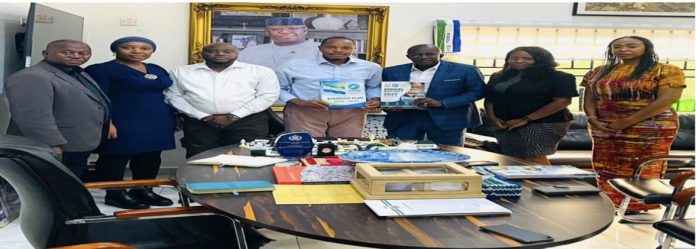
The Chief Minister made the remarks when a delegation from ICPNC, led by Board Chair Rev. ShodankehJohnson, paid a courtesy visit to present the Commission’s 2025 Annual Report and Strategic Plan. The delegation included Executive Secretary HawaSally Samai and members of the Commission’s Senior Management.
The engagement provided an opportunity for ICPNC to brief the Chief Minister on its mandate, achievements, ongoing programmes, institutional priorities, and interventions aimed at preventing conflicts and strengthening peace and social cohesion across the country.
Presenting the 2025 Annual Report and Strategic Plan on behalf of the Commission, Board Chair Rev. Shodankeh Johnson said the submission reflects ICPNC’s commitment to transparency, accountability, and compliance with its statutory responsibilities. He explained that Section 22(1) of the Independent Commission for Peace and National Cohesion Act requires the Commission to submit to the Minister, within three months after the end of each financial year, a report on the performance of its functions during that year and on its policies and programmes.
Rev. Johnson stated that the submission of the 2025 Annual Report reflects the Commission’s compliance with this legal requirement while providing stakeholders with an overview of its activities, achievements, challenges, and strategic direction.
During the meeting, Chief Minister Dr. David MoininaSengeh acknowledged the importance of strong institutions in supporting national development and maintaining peace. He noted that Sierra Leone’s discussions around constitutional reform and governance improvements have continued over the years, emphasizing the need for institutions with clear responsibilities to monitor progress and ensure accountability.
The Chief Minister recognised the importance of ICPNC’s role in tracking developments related to peace and national cohesion, noting that institutions with such responsibilities are essential in ensuring that commitments made towards national development and stability are followed through.
He further encouraged the Commission to continue strengthening its communication and public engagement efforts, noting that effective communication is vital in ensuring that citizens, policymakers, and stakeholders understand the work being undertaken to promote peace and address national challenges.
Presenting an overview of the Commission’s work, Executive Secretary Hawa Sally Samai highlighted ICPNC’s nationwide peace monitoring and early warning mechanisms, which bring together peace monitors, civil society organizations, media practitioners, security institutions, and other stakeholders across the country.
She explained that information gathered through these networks is verified through the Commission’s peace monitoring structures before being analyzed through the Peace Situation Room, which remains operational as a 24-hour mechanism for tracking emerging issues and supporting timely responses.
The Executive Secretary noted that the Commission produces regular situation reports which are shared with relevant institutions, including the Sierra Leone Police and other security agencies, to support evidence-based decision-making and early intervention.
She further highlighted ICPNC’s role in promoting peaceful democratic participation, noting that the Commission monitored the lower-level elections of both the Sierra Leone People’s Party (SLPP) and the All People’s Congress (APC) as part of efforts to encourage tolerance, dialogue, and peaceful political engagement.
Madam Samai emphasized that ICPNC remains impartial in its engagements, working with all political parties, civil society organizations, traditional and religious leaders, communities, and other stakeholders to promote issue-based dialogue and prevent conflicts.
She added that the Commission’s mandate goes beyond electoral processes, covering conflict prevention, mediation, early warning, and responses to issues that may threaten peace and national cohesion.
The Executive Secretary also highlighted the Commission’s inclusive approach to peacebuilding, noting that its monitoring structures benefit from contributions from a wide range of stakeholders, including community actors and institutions working across the country.
The engagement reaffirmed the importance of collaboration between ICPNC and Government institutions in strengthening Sierra Leone’s peace architecture. Both sides recognized the need for sustained dialogue, accountability, and collective action to consolidate the gains made in peacebuilding and promote a more cohesive society.
Through its Strategic Plan and ongoing interventions, ICPNC continues to strengthen its efforts to prevent conflicts, promote dialogue, and support national efforts towards a peaceful and united Sierra Leone.

