
AYV News, May 21, 2026
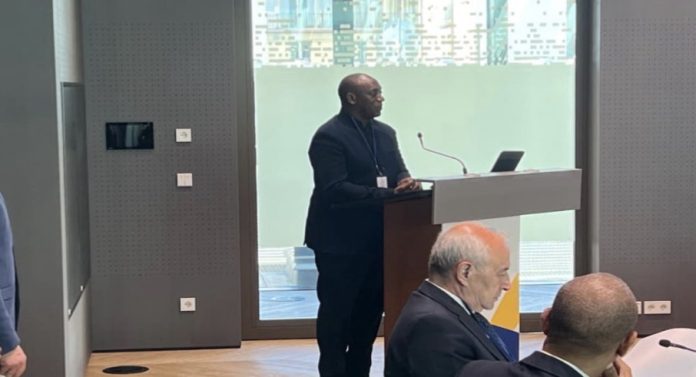
Dr. Kandeh K. Yumkella, Chairman of the Presidential Initiative on Climate Change, Renewable Energy and Food Security (PI-CREF), has called for a systems-based approach to energy development, food security, and industrialisation in Africa during a keynote address delivered at the OPEC Fund Knowledge Series in Vienna, Austria.
The high-level engagement, held on 20th May 2026, brought together development experts, policymakers, and international partners to discuss sustainable energy and economic transformation across developing countries.
Dr. Yumkella, who was introduced as a long-standing partner of the OPEC Fund, was recognised for his extensive international career, including his previous roles as United Nations Under-Secretary-General, founding Chief Executive Officer of Sustainable Energy for All, and two-term Director General of the United Nations Industrial Development Organization (UNIDO).
Opening his remarks, Dr. Yumkella disclosed that the visit marked his second trip to Vienna within a month, following recent engagements involving President Julius Maada Bio. He also thanked the OPEC Fund for its continued collaboration with Sierra Leone and ongoing support for development initiatives.
Speaking on Africa’s development challenges, Dr. Yumkella emphasised that energy remains central to sustainable development, economic growth, and resilient food systems. He highlighted Sierra Leone’s PI-CREF initiative as an example of integrated development planning that combines climate change, renewable energy, and food security into one coordinated national agenda.
He commended the OPEC Fund’s development finance approach, describing it as one built on partnership, patience, and long-term purpose, stressing that sustained cooperation is necessary for advancing energy systems and agricultural transformation in Africa.
Addressing Africa’s energy realities, Dr. Yumkellanoted that the continent currently has approximately 260 gigawatts of installed electricity capacity, much of which is concentrated in North and South Africa. Excluding those regions, he said, the rest of Africa possesses less installed electricity capacity than India alone.
He warned that Africa must significantly expand its energy capacity to about 650 gigawatts by 2035 and 700 gigawatts by 2040 to meet growing development demands. According to him, achieving this target will require a major shift from traditional “build-and-dispatch” electricity systems toward more flexible renewable-based energy systems supported by stronger transmission grids, energy storage, and climate-resilient infrastructure.
Dr. Yumkella further stressed the importance of energy security in safeguarding African economies from global shocks, noting that geopolitical tensions and fuel price volatility continue to expose African countries to inflation, fiscal pressures, and reduced investment capacity.
He explained that energy security, alongside sustainability and affordability, must remain central to national planning and development strategies.
The former UN official also highlighted “Mission 300,” an African energy initiative involving approximately 30 countries, describing it as a major step toward integrated long-term energy planning. He said the initiative encourages governments to align energy generation, transmission, industrialization, and agricultural development while strengthening human capital and technical capacity.
In his concluding remarks, Dr. Yumkella urged African governments and development partners to move away from fragmented project-based interventions toward holistic systems capable of delivering sustainable economic transformation, job creation, and industrial growth.
He called for stronger alignment between energy planning, industrialisation, and social development priorities, while encouraging African nations to leverage their natural resources to create long-term value and economic opportunities for citizens.
PI-CREF, which operates under the Office of the President of Sierra Leone, focuses on advancing climate resilience, renewable energy access, and sustainable food systems through integrated national development strategies.

