AYV News, June 8, 2026
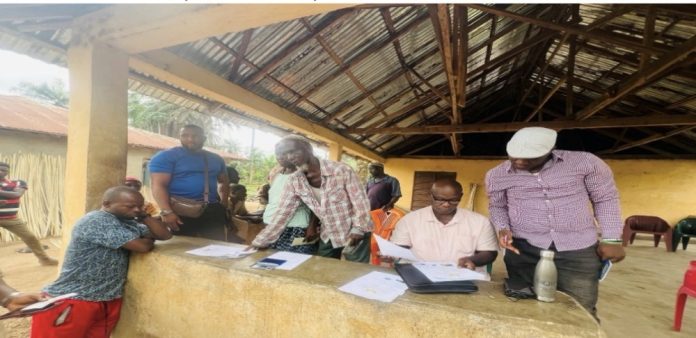
The National Development-Induced Resettlement Directorate (NDIRD) of the Ministry of Planning and Economic Development (MoPED) has commenced a four-day community sensitization and verification exercise for Project Affected Persons (PAPs) under the Enhancing Sierra Leone Energy Access Project (ESLEAP) in Koinadugu district.
The exercise, which began in Fadugu, is part of preparations for the implementation of the Regional Emergency Solar Power Intervention Project, aimed at improving electricity access in the district through the construction of a 33kV distribution line from the 225/33kV Fadugu Substation to Kabala, including a new substation in Kabala Township.
A total of 151 Project Affected Persons from 22 communities along the Fadugu–Kabala corridor are participating in the exercise, which seeks to ensure that residents understand the project’s objectives, their rights and entitlements, and the compensation procedures for any assets that may be affected during implementation.
The sensitization programme brought together officials from the Electricity Distribution and Supply Authority (EDSA)-hosted project implementation team, representatives of the NDIRD, traditional authorities, local stakeholders, and residents from communities along the project route.
Addressing participants, project officials outlined the scope of the proposed power distribution infrastructure and highlighted its expected benefits, including improved access to reliable electricity, enhanced business opportunities, better public services, and broader socio-economic development across Koinadugu district.
A major focus of the engagement was the explanation of compensation and entitlement packages available to affected persons. Senior Environmental Specialist, Senesie Fullah, and Social Safeguards and Gender Specialist, Augusta Berewah, informed participants that compensation would be determined based on verified losses and affected assets.
They assured community members that the process would be conducted in a transparent and equitable manner and encouraged individuals to utilize established grievance mechanisms to address concerns throughout the project lifecycle.
The verification exercise is designed to confirm information gathered during earlier assessments, including ownership claims, occupancy rights, affected assets, and beneficiary details. Officials emphasized that the process is essential to ensuring that compensation is paid only to eligible individuals and in accordance with national resettlement policies and international safeguard standards.
Speaking during the exercise, NDIRD Deputy Director Dennis Macfoy stressed the importance of community participation and cooperation.
He noted that accurate verification is critical to protecting the rights of Project Affected Persons and ensuring compliance with Sierra Leone’s resettlement framework.
Mr. Macfoy encouraged residents to provide accurate information and engage openly with verification teams to facilitate a smooth and credible process.
Traditional leaders and local authorities welcomed the project and pledged their support for both the verification exercise and the broader implementation of the electricity distribution initiative.
They urged residents to cooperate with project officials and make use of available grievance channels when necessary.
Community members also expressed optimism about the project’s potential to transform livelihoods through improved electricity access, noting that reliable power would support economic growth, education, healthcare delivery, and local enterprise development.
The verification and sensitization exercise is being conducted across all affected communities along the project corridor and will conclude in Kabala Township.
The Regional Emergency Solar Power Intervention Project is expected to play a significant role in expanding energy access in Koinadugu district and advancing Sierra Leone’s broader efforts to strengthen energy infrastructure and promote inclusive socio-economic development in underserved communities.

